



Vitamin C: the complete guide to forms, dosages and daily use
STATE editorial team · Updated Oct 2, 2026
In this article
Vitamin C is the most familiar supplement in the world, and probably the most poorly bought. Most people compare milligrams on a label and stop there, which is a bit like choosing a car by the size of its fuel tank. The dose matters. The form matters as much. And the way you take it, day after day, matters more than either. This is the complete guide: what vitamin C actually does in the body, why the liposomal form exists, how to read a dosage properly, when to take it, and the mistakes that quietly waste half of what you buy.
What vitamin C actually does in the body
Ascorbic acid is a water-soluble vitamin involved in a remarkable number of processes. In Europe, the claims a brand may legally make are limited to the official register of authorised health claims, and vitamin C carries one of the longest lists of any nutrient.
Vitamin C contributes to the reduction of tiredness and fatigue. It contributes to the normal function of the immune system. It contributes to normal energy-yielding metabolism and to normal psychological function. It contributes to the protection of cells from oxidative stress. And it contributes to normal collagen formation for the normal function of skin, blood vessels, bones, cartilage, gums and teeth.
That last one deserves attention, because it is the bridge between the immunity aisle and the beauty aisle. Collagen synthesis genuinely depends on vitamin C: it is a required cofactor for the enzymes that stabilise collagen fibres. This is why vitamin C sits naturally alongside a collagen routine, and why Glass Glow contains vitamin C rather than collagen alone.
Why humans need a supply every single day
Most animals synthesise their own vitamin C. Humans do not: a mutation in an ancestral enzyme means we depend entirely on what we eat. That is the first particularity.
The second is that the body stores very little of it. Vitamin C is water soluble, circulating levels saturate, and what exceeds the saturation point is largely eliminated. There is no reservoir to draw on next week.
Together, these two facts explain the single most useful rule about vitamin C: regularity beats intensity. A daily supply matters far more than an occasional large dose taken when you already feel unwell.
The forms of vitamin C, compared honestly
Ascorbic acid
The reference form, the one used in the overwhelming majority of research. Inexpensive, well documented, effective. Its only real drawback is acidity, which can bother sensitive stomachs at higher doses.
Mineral ascorbates
Ascorbic acid buffered with a mineral, sodium or magnesium ascorbate for instance. Gentler on the stomach, and the vitamin C itself is identical once absorbed. You are simply swallowing the mineral too.
Liposomal vitamin C
Here the active is not modified: it is carried. A liposome is a microscopic sphere built from phospholipids, the same family of molecules that composes your own cell membranes. The vitamin C travels associated with this phospholipid structure, which acts as a carrier designed to support the bioavailability of what it transports.
The analogy we use is a letter in an envelope rather than loose in the rain. The content is identical. The journey is better protected. This is the form we chose for Bright Boost, and we explain the underlying logic in our article on why the form matters.
Vitamin C with bioflavonoids
Bioflavonoids are plant compounds naturally found alongside vitamin C in fruit. They are pleasant marketing, but in Europe they carry no authorised health claims of their own, so treat them as a nice-to-have rather than a reason to pay more.
How to read a vitamin C dosage properly
European regulation requires the amount to be declared per recommended daily dose, with its percentage of NRV, the Nutrient Reference Value. This is your calibration tool. Two labels can look similar and deliver completely different amounts once you check whether the figure refers to one capsule or to the full daily dose.
High percentages are common with vitamin C and are not alarming in themselves: the vitamin is water soluble and excess is eliminated. What matters is that the amount is stated clearly, per daily dose, and that you know what you are taking. Our own guide on reading a supplement label walks through the five checks that apply to any product.
When to take vitamin C
Morning is the practical answer, not because vitamin C is a stimulant, it is not, but because breakfast is the easiest moment to anchor a habit that has to survive three hundred and sixty-five days. Vitamin C is not caffeine and will not keep you awake, but a routine attached to coffee and breakfast is a routine that lasts.
With or without food is largely a question of comfort. If plain ascorbic acid bothers your stomach, take it with a meal, or choose a gentler form.
One genuinely useful pairing: vitamin C and iron. Vitamin C improves the absorption of non-heme iron, which is why Inner Strength and a vitamin C source in the same meal make sense, and why both should be kept away from tea and coffee, which do the opposite.
The five mistakes that waste your vitamin C
1. Taking it only when you feel run down. The body cannot stock it. A supply that starts on the day you need it is a supply that arrives late.
2. Chasing the highest number on the box. Past a certain point, absorption plateaus and the surplus is eliminated. Consistency is worth more than escalation.
3. Buying blends with no amounts declared. If the label hides behind a proprietary blend without figures, it is hiding something.
4. Ignoring the form entirely. Two products with the same milligrams behave differently depending on how the active is carried. Delivery is not a marketing detail.
5. Stopping after three weeks. Nutritional status is built over cycles of weeks. Our jars are designed as thirty-day cycles for exactly this reason.
Vitamin C and the rest of your routine
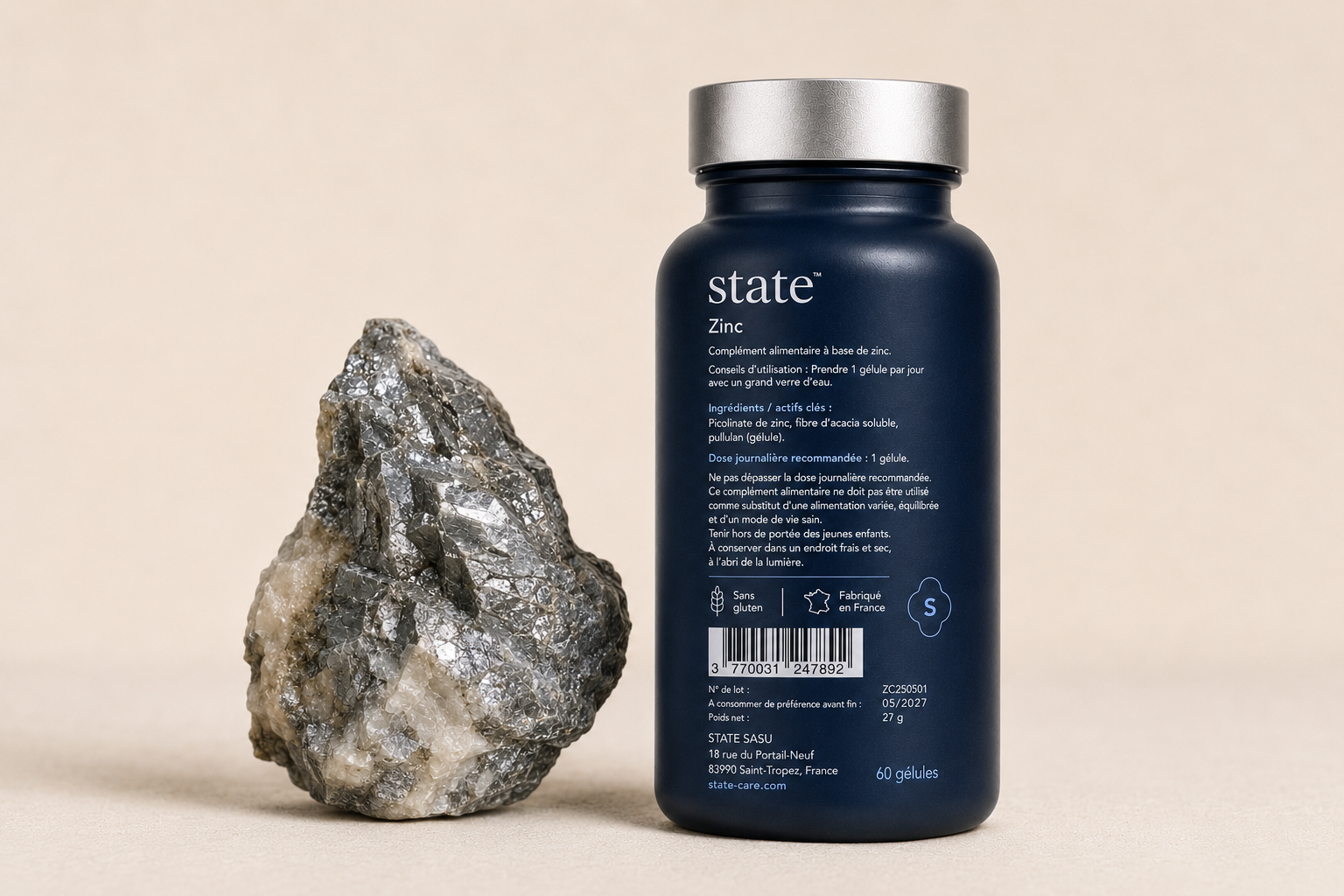
Vitamin C is the most sociable nutrient in a supplement cabinet. It pairs with collagen in Glass Glow, since it contributes to normal collagen formation. It sits alongside zinc in Clear Shield, both contributing to the normal function of the immune system. And it supports iron absorption alongside Inner Strength.
Taken as a standalone, Bright Boost delivers liposomal vitamin C at 500 mg per daily dose of two capsules, in a jar of sixty capsules covering thirty days. The classic, done right. It anchors our Immune Support collection alongside vitamin D3 and zinc, and joins the Skin & Beauty formulas wherever collagen formation is the objective.
Frequently asked questions
Is liposomal vitamin C better than regular vitamin C?
The active is identical, ascorbic acid in both cases. What differs is the delivery: the liposomal form associates the vitamin with a phospholipid carrier designed to support its bioavailability. We chose it because form matters as much as formula, not because the classic form is ineffective.
How much vitamin C should I take per day?
Follow the recommended daily dose stated on the product you use, and do not exceed it. For a personal recommendation, particularly if you have a medical condition or take medication, ask your doctor or pharmacist.
Can I take vitamin C every day of the year?
That is exactly how a daily formula is designed to be used. Because the body neither produces nor stores it meaningfully, a regular intake is the entire point.
Does vitamin C prevent colds?
No product may claim that in Europe, and we will not imply it. The authorised claim is that vitamin C contributes to the normal function of the immune system. That is a genuine contribution to a normal function, not a preventive promise.
Can I take vitamin C on an empty stomach?
Many people do without any issue. If you find plain ascorbic acid uncomfortable, take it with a meal or choose a buffered or liposomal form.
The short version
Take it daily, because your body cannot make it or store it. Check the amount per daily dose, not per capsule. Pay attention to the form, because delivery decides how much of the label reaches you. Anchor it to breakfast so the habit survives. And judge a brand by whether it talks in the careful language of the authorised claims, which is exactly the standard we set out on The Science.
Food supplements are not a substitute for a varied, balanced diet and a healthy lifestyle. Do not exceed the stated recommended daily dose. Keep out of reach of young children.
State IV Drip
Support wherever you are
Daily supplements build a routine over time. For a one-off need, State IV Drip offers a separate, medically supervised service at your address, after a physician consultation and subject to local availability.