How to read a supplement label like a professional
A supplement label is not packaging copy. It is a legal document, defined line by line by European regulation, and once you know how to read it, you can judge the seriousness of any product in under a minute. This guide gives you the five checks we would apply to any supplement on the market, and that we apply, first of all, to our own. Take any jar of The Daily Range and read along.
1. Find the actives, declared per daily dose
European rules require the amounts of vitamins, minerals and other substances to be declared per recommended daily dose, not per capsule and not per 100 grams. This single rule kills most marketing tricks: a label that hides behind vague wording, or a proprietary blend with no amounts, is not giving you the information the law considers essential.
On a State label, you will always find the exact amount of each active per daily dose. On Glow Daily, for example, the hydrolysed marine collagen is dosed in the hundreds of milligrams per daily intake, not sprinkled for the ingredient list.
2. Check the percentages of NRV
Next to each vitamin and mineral, you will find a percentage of NRV, the Nutrient Reference Value defined at European level. This number is your calibration tool: it tells you instantly whether a dose is meaningful or decorative. A vitamin present at 2% of NRV is there for the label, not for you.
3. Read the claims, and know the pattern
In Europe, health claims on food supplements are strictly limited to the official EU register, and authorised claims all follow the same careful pattern: contributes to. Zinc contributes to the maintenance of normal skin, hair and nails. Vitamin C contributes to the reduction of tiredness and fatigue. Vitamin D contributes to the normal function of the immune system.
Any product promising to cure, treat, boost beyond these formulations, or guarantee visible results in days, is stepping outside the authorised framework. When you see the sober contributes to wording, you are reading a brand that respects the rules. We explain why we embrace this framework on The Science.
4. Scan the other ingredients
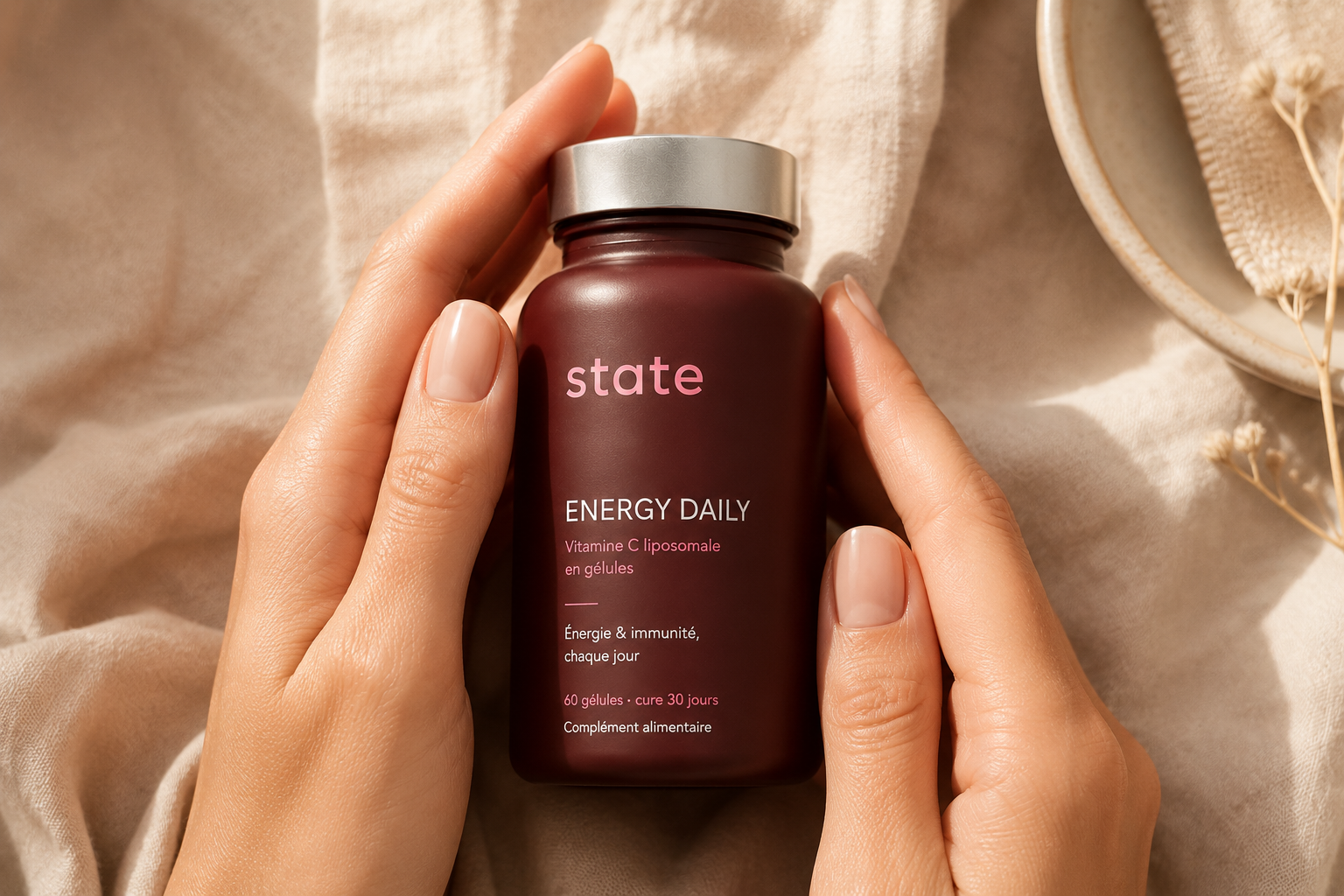
After the actives come the excipients: the capsule material, anti-caking agents, colourants, coatings. The shorter this second list, the better. Two details are worth a systematic look. The capsule itself: vegetal capsules, like the pullulan capsule of Energy Daily, versus gelatin. And the presence of allergens, which must be clearly declared: Glow Daily, for instance, clearly states that it contains fish collagen.
5. Look for the mandatory mentions
A compliant European label always carries a fixed set of mentions: the words food supplement, the recommended daily dose and the warning not to exceed it, the reminder that a supplement is not a substitute for a varied, balanced diet and a healthy lifestyle, and the instruction to keep the product out of reach of young children. Their absence is the reddest of red flags, because these mentions are not optional courtesy: they are the law.
Bonus check: who makes it, and where?
The label tells you what is inside. The brand should be able to tell you the rest: which laboratory manufactures the product, in which country, with what traceability. If that information is nowhere to be found, ask why. Our answer is public and detailed in our article on what Made in France really means: a French laboratory, batch by batch documentation, and an email address, contact@state-care.com, where every question gets an answer.
Frequently asked questions
Is a longer ingredient list a bad sign?
Not automatically, but every ingredient should have an explainable role. A long list of colourants and coatings on a simple vitamin is a legitimate reason to ask questions.
What does NRV mean exactly?
Nutrient Reference Value: the daily reference amount for vitamins and minerals set by European regulation, used to express dosages as percentages on labels.
Are these rules the same everywhere?
No. The contributes to framework and the mandatory mentions described here are European. Products bought outside the EU may follow very different rules, which is worth keeping in mind when ordering from abroad.
Food supplements are not a substitute for a varied, balanced diet and a healthy lifestyle. Do not exceed the stated recommended daily dose.